If you are planning a Kenya safari and wondering how do safari lodges handle allergies, the honest answer is this: most lodges can accommodate specific dietary needs when you tell them early, explain the reaction clearly, and confirm the plan at every camp. No remote camp can promise zero cross-contamination. But permanent lodges in the Maasai Mara, Amboseli, Samburu, and the conservancies manage gluten-free, nut-free, dairy-free, and other allergy-friendly meals every season.
How do safari lodges handle allergies in Kenya?
Most established Kenya safari lodges can handle allergies with written notice, a clear conversation with the chef, and reconfirmation before every meal. They cannot guarantee zero cross-contamination, especially in remote areas. A lodge’s allergy safety depends on its kitchen, your plans, and your emergency supplies, not on a general promise.
In the Maasai Mara, Amboseli, Samburu, and the private conservancies, camps range from large permanent lodges with fixed kitchens to mobile tented camps that move with the wildlife. A permanent lodge can usually manage multiple allergens. A mobile camp may depend on one small kitchen and a shorter supply list. The same menu that works at a base camp may not be possible at a bush breakfast or a fly camp.
For area-specific planning, see our Maasai Mara guide, Amboseli safari guide, and Samburu safari guide.
What should I tell a safari lodge about a severe allergy?
Tell the operator about every allergy in writing when requesting a quote. Include the allergen, the reaction severity, whether trace amounts matter, and your emergency plan. Ask the operator to forward the same information to every camp, then reconfirm three to four weeks before arrival. Severe or multiple allergies need more notice because remote camps order supplies only periodically.
Do this before you pay a deposit. Write down the allergen, what happens if you eat it, and what to do in an emergency. Ask the operator to send that note to each camp. Then reconfirm three to four weeks before arrival and again when you land or reach the first lodge. If your allergy is severe or you have more than one, give at least that much notice.
How do lodges prevent cross-contamination?
A well-managed camp reduces cross-contamination by using separate or clean utensils, pans, preparation surfaces, storage, and cooking oil for allergy meals. Ask whether the meal is prepared in a separate area or before shared cooking begins. No remote lodge can guarantee zero risk, so the camp’s actual procedure matters more than a general promise.
At a permanent lodge, ask whether the chef uses separate cutting boards, pans, and cooking oil for your meals. A camp that cooks allergy meals before shared dishes reduces the chance of airborne or utensil contact. For severe allergies, a separate prep area matters. But no remote kitchen can look like a hospital. There is always some risk.
Here is an indicative comparison of what different camp types usually offer.
| Lodge type | Typical allergy controls | Supply and restocking | Risk level |
|---|---|---|---|
| Permanent lodge in Maasai Mara or Amboseli | Fixed kitchen; separate utensils, pans, and prep area | Regular weekly or biweekly supply runs | Lower, but zero exposure cannot be guaranteed |
| Conservancy camp with a main kitchen | Dedicated allergy prep area; meals cooked before shared dishes | Supply runs every few days during high season | Lower to moderate |
| Mobile or seasonal camp | Single cook; smaller kitchen and fewer backup ingredients | Supplies last for the season; restocking may take days | Moderate |
| Fly-camp or overnight bush camp | No full kitchen; meals packed elsewhere | Relies on pre-packed boxes; no on-site backup | Higher |
What allergy-friendly safari meals can I expect?
Most Kenyan camps cook from scratch for a small guest list. Plain meat, vegetables, rice, maize-based ugali, and simple stews are practical allergy-friendly options. Request ingredient lists and avoid sauces or buffet dishes when uncertainty remains. Gluten-free, dairy-free, egg-free, nut-free, and shellfish-free meals are commonly possible when the chef receives clear instructions.
Many menus include grilled chicken, beef, fish, vegetables, rice, chapati, and ugali. These simple dishes work for gluten-free safari meals if the kitchen skips sauces and shared cooking oil. If you are nut-free or dairy-free, ask about desserts and breakfast breads. At bush breakfasts, fruit, boiled eggs, and plain yogurt are common, but confirm what the cook uses.
What happens with packed lunches on game drives?
The lodge kitchen usually prepares packed breakfasts and lunches for game drives, but the first box may come from an operator or another property. Ask who prepared it, how it is labeled, and whether it is sealed separately from other guests’ food. Carry safe snacks as a backup, especially during long drives between camps.
The first day of a safari may start at an airport hotel or a transit camp, not the main lodge. Ask who packs the first lunch. When you leave camp, ask for a sealed box with your name and allergy. Check the label before you open it. If the kitchen does not prepare your box separately, ask for one that is. Carry safe snacks in your daypack. In the Maasai Mara, game drives can last most of the day, and a wrong box is not easily replaced on the reserve road.
What should I confirm at check-in and before each meal?
At every camp, give the manager and chef a printed allergy card. State whether exposure could cause anaphylaxis, and confirm the plan before each meal. Ask what ingredients are in sauces, bread, desserts, and packed boxes. Tell the guide too, because the guide may need to help communicate your restrictions away from camp.
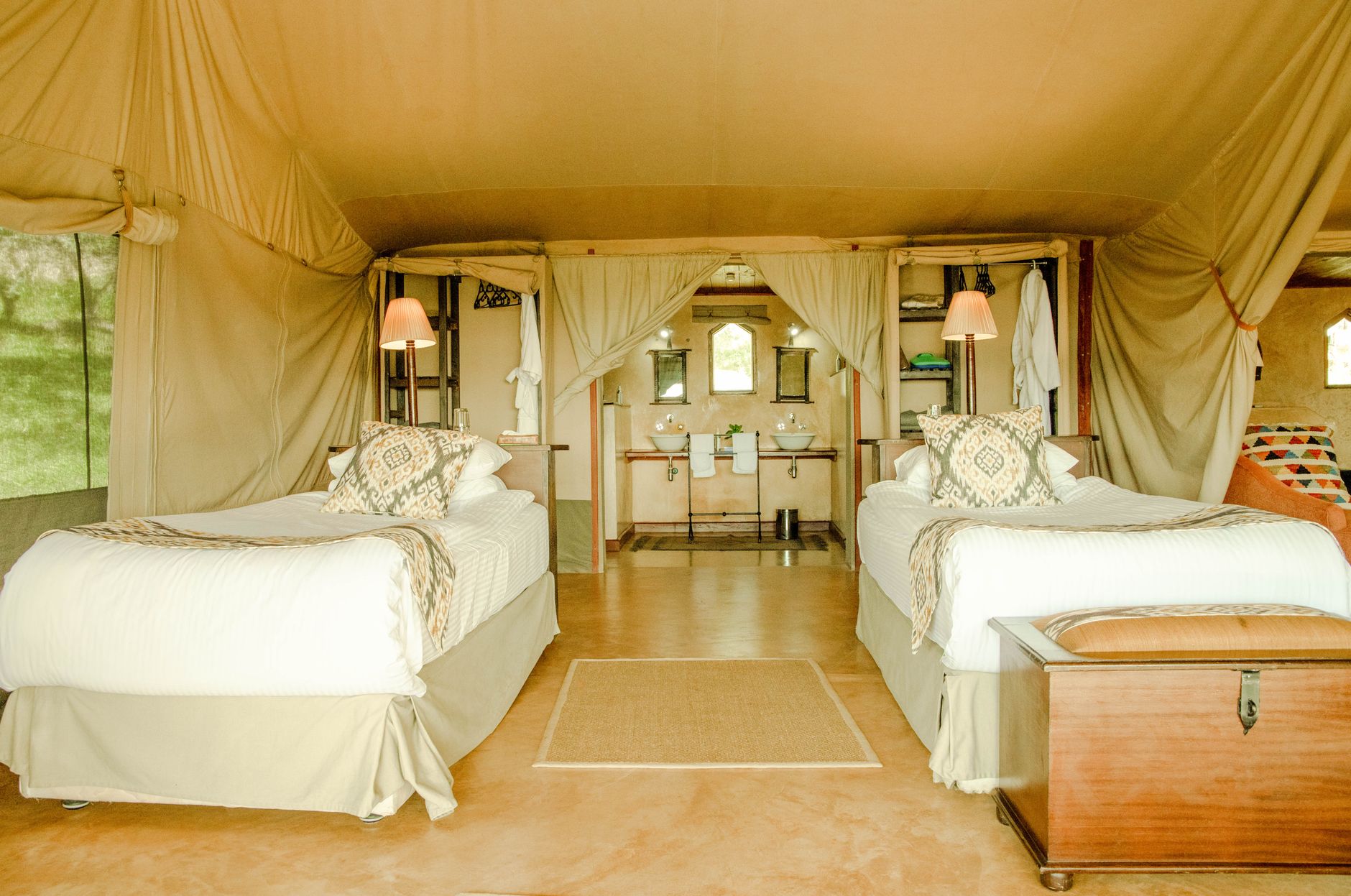
Hand over the card with your name, allergens, reaction type, and emergency instructions. Give one to the manager and one to the chef. At every meal, ask what is in the sauce, the bread, the dessert, and the packed box. Buffets are riskier because serving spoons move between dishes. Ask for plated meals instead. Tell your vehicle guide, too. If you have an allergic reaction away from camp, the guide must know what to do and where to get help. If you need to store medication or snacks in your room, ask about the tent details, similar to what to check in a private safari tent.
How do remote camps handle emergency medication and safety?
Carry prescribed emergency medication, including epinephrine where medically indicated, in hand luggage. Keep it with you on every game drive rather than in the tent. Bring a spare device if prescribed, antihistamines as advised by a clinician, safe snacks, and printed allergy information. Discuss the camp’s radio coverage, evacuation process, and nearest medical facility before travel.
Put auto-injectors in your hand luggage on the flight to Kenya. On the ground, keep them with you in the vehicle or in a small bag, not in the tent. The vehicle’s cooler or the camp’s medical kit may be too far if you are at lunch. Bring a spare if your clinician prescribes one. Carry oral antihistamines if advised. Tell the guide where the medication is. Ask each camp about radio or satellite coverage, evacuation time, and the nearest clinic or hospital. In remote parts of Samburu or the northern conservancies, an airstrip is often closer than a hospital.
Do safari lodges charge extra for allergy-friendly meals?
Standard allergy accommodations are often included, but imported specialty products may cost extra. Confirm any surcharge in writing. Permanent lodges with fixed kitchens, managers, stable refrigeration, and regular supply routes generally offer more predictable procedures than highly mobile camps. Ask how ingredients are restocked and what happens if a safe product runs out.
Many camps do not charge extra for standard adjustments. But imported gluten-free bread, dairy-free milk, or nut-free desserts may cost more because the camp has to fly them in. A camp in a remote part of the Maasai Mara conservancy or a mobile camp in Samburu may not keep these products in stock. Ask for a written note about any surcharge before you pay the balance. This fits with the broader Kenya safari booking and cancellation costs you should understand before final payment.
What do travelers ask about allergies on safari?
Travelers most often ask whether lodges can accommodate allergies, how camps handle severe reactions, how cross-contamination is controlled, what happens with packed lunches, and whether extras cost money. The short answers are yes with advance notice, carry prescribed medication, ask about controls, label boxes, and confirm charges in writing.
Can safari lodges accommodate food allergies?
Yes, many established safari lodges can accommodate food allergies when informed early and given precise written instructions. Ask the chef about ingredients, cross-contamination controls, and packed meals, but do not assume that a remote camp can guarantee zero exposure.
Can safari camps handle anaphylaxis-level allergies?
Many established camps can prepare safer meals for guests with severe allergies, but they cannot replace emergency medical care or guarantee zero cross-contamination. State clearly that the allergy can cause anaphylaxis, obtain written confirmation of the camp’s procedures, and carry prescribed auto-injectors throughout the safari.
How do safari lodges prevent cross-contamination?
Camps may use separate preparation areas, cleaned or dedicated utensils and pans, separate storage, and allergy meals cooked before shared dishes. Ask exactly which controls are used at each camp, because procedures vary between permanent lodges, mobile camps, buffets, and remote kitchens.
What happens with allergy-friendly packed lunches on game drives?
The camp generally prepares and labels a separate packed lunch, but the first meal may be supplied by an operator or another lodge. Confirm who prepared the box, request a sealed or clearly labeled meal, and carry safe snacks in case the planned food is unavailable.
Do safari lodges charge extra for allergy-friendly meals?
Many lodges do not charge extra for ordinary dietary adjustments, although imported gluten-free or other specialty products may add a fee. Ask for any surcharge in writing before paying the balance, especially when a camp must transport products to a remote conservancy.
How can I find a safari operator that manages allergies well?
Look for a Kenya operator that collects allergy details during the quote, confirms them with every camp, and puts its procedures in writing. Ask how it handles remote supply limits and emergency plans. A good operator will help you compare packages that match your needs.
You want an operator that asks about allergies as part of the quote, sends details to every camp, and gives you a contact person on the ground. That is a sign the kitchen will know your name when you arrive. A thoughtful operator also cares about ethical wildlife encounters on safari, which often means smaller camps, lower vehicle numbers, and more careful staff. Good planning makes allergy safety easier.
Where can I find more safari planning resources?
- Maasai Mara interactive map from SafariPure
- Masai Mara Great Migration guide from Trunktrails Safaris
- Interactive Maasai Mara map from Valley Safaris
- Masai Mara destination guide on FindMySafari
How do I compare safari operators for booking?
Once you have your allergy plan in writing, you can compare safari operators at FindMySafari, browse packages through Valley Safaris, or check options at Trunktrails Safaris. They can match your allergy plan with the right Kenya lodges.